
In the 1980s, divers and sailors were captivated by Willy, a large manta ray who displayed extraordinary intelligence, compassion, and curiosity. He would swim with divers daily, leaving a lasting impression on all who encountered him. Willy’s unique personality and presence are deeply missed. Willy is 22 feet across and identified by a diamond pattern of four black dots on his right shoulder. If you’re diving out at Isla San Benedicto Island (250 miles South of Cabo San Lucas, Mexico), and you see this incredible animal, please contact me immediately. My friend Terry Kennedy, who is 80 years old now, wants more than anything in the world to see his best friend one more time.
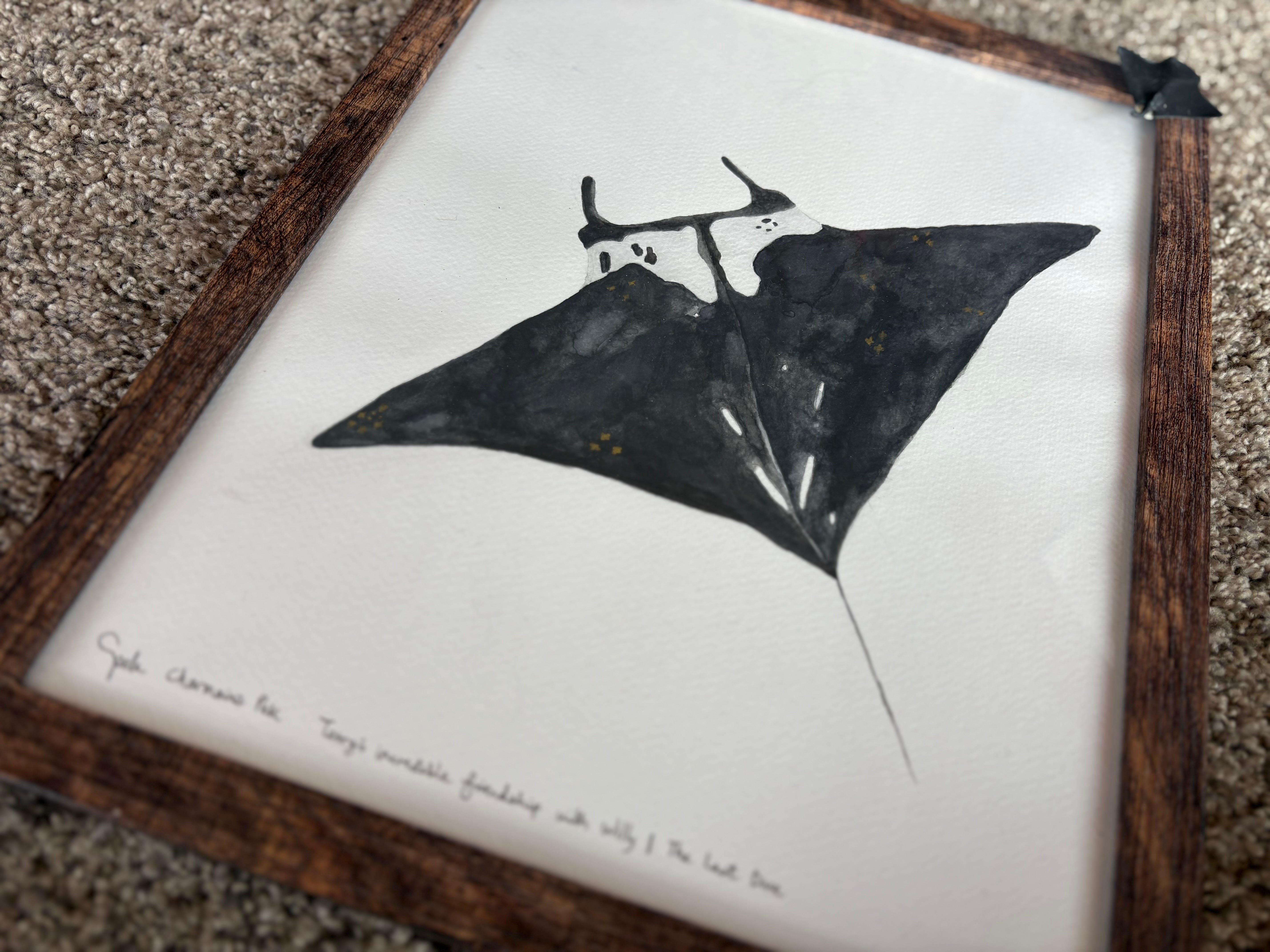
Terry and Willy had a remarkable relationship that I explore in the documentary The Last Dive. For 19 years, Terry would live out at the island with Willy when the weather permitted. He would ride on Willy’s huge back nearly every day. In our doc, we take Terry out Isla San Benedicto to search for him. What happened was remarkable, but I don’t want to spoil it here as the experience is best seen on a the big screen. I hope I can share this film with you soon, but right now, we are in the midst of solving a distribution puzzle for the film. Something the entire documentary industry is struggling with at the moment, unfortuantly.
Manta Intelligence (spoiler alert)
It was a difficult challenge to bring a relationship with animal that can’t speak into focus. What can mantas feel? Is Willy able to think in the same way that a human can? Terry recorded hundreds of hours of footage of Willy and him playing together and this extrodinary record provided the first insight into these fascinating questions. It also inspired the first manta researcher, Dr. Bob Rubin, to begin studying them. We interviewed Bob for the film and he helped me understand what may have been going on. It is well known in biology, that the brain to body weight ratio is an important indicator of intelligence. In nature, brain sizes generally increase as body size increases. A dog for example, has a brain size that is what we expect: one to one. Humans have brains much larger than we expect, about seven to one. Mantas also have very large brains, about four times what we expect. They have the largest brains of any fish. Like humans, manta brains are convulted, which greatly increases the surface area. For me, the smoking gun is the mirror test. If a mirror is placed in front of an animal, most do not recognize themselves, but instead see another animal. They test this by putting a mark on the body of the animal where they can only see by looking in the mirror. If they then attempt to see the mark on their own body, we know that they recognize self. Humans are self aware, all primates are, ravins pass the mirror test, as do elephants, and dolphins. It’s an exclusive club. Giant manta rays like Willy also pass the mirror test.
Does a story have commercial potential?
This film is a “commercial” documentary focusing on a remarkable character named Terry. The film is commercial, because the story is personal, yet big, inimate, yet changes the world. Our protangist can bring in a large audience and doesn’t alientate anyone. Terry is a veteran, a Hell’s Angel, a sailor, a scuba diver, a conservationist, and above all, he has a remarkable friendship with a giant manta ray named Willy. He is interesting.
On screen, he is dynamite. Great story teller, pleasent voice, expressive face and hands.
Everybody likes a character who cares for animals. In fact, many directors will often cheat and add a “save the cat” scene at the beginning of a film, if they are worried that the audience doesn’t find their character likable enough. The Last Dive is designed to immediately connect with a wide audience, showcasing Terry’s multifaceted life and his bond with Willy, appealing to viewers who love stories about animals and human compassion.
My team has one concern: Terry is 80 years old and Netflix prefers younger progantists. The streamers are in a battle with social media for young viewers, afterall. But, my investors are willing to take the risk, so theyput up the cash and we’re making a film!
Not every story fits a commercial film format, but that doesn’t mean it shouldn’t get made.
Impact documentaries aim to educate and change minds about specific issues, often featuring a strong call to action. These films are usually part of a larger campaign with numerous non-profit and brand partnerships. Building these relationships early and beginning the planning and execution of the impact campaign are crucial steps. A prime example of an impact film is “The Cove,” which highlighted dolphin killings in Japan. The film culminates in a powerful scene where Ric O’Barry confronts the International Whaling Commission with undeniable footage of the slaughter. Another iconic impact film is “An Inconvenient Truth,” where Al Gore raises awareness about climate change. In both cases, the film was embedded in a network of impact partners that gave the films larger meaning and connected audiences with the ability to take action on key legislation or other real world changes.
There are a few another genres worth pointing out: News style documentaries, festival documentaries, experimental documentaries, shorts, and social media docs. Which one fits your content, budget, and goals?
Next post: I’m headed out to sea to search for Willy. Also some thoughts on pitching to get a film funded.